
Seal Beach Waterfront Properties: Why They’re the Best Investment in 2026
Seal Beach waterfront properties sit at the crossroads of limited supply and escalating coastal demand. According to Redfin data through mid‑2025, Seal Beach homes show a competitive market with sale-to-list ratios near 100%, reflecting strong buyer pressure. Investors targeting 2026 increasingly prioritize stable coastal communities where infrastructure, zoning, and lifestyle amenities align. In Seal Beach, that combination appears along Marina Drive, Ocean Avenue, and the blocks flanking the historic Seal Beach Pier and Main Street commercial corridor.
Why are Seal Beach waterfront properties drawing investors in 2026?
Seal Beach offers a rare blend of small-town scale and regional connectivity. The waterfront stretches from the San Gabriel River jetty near 1st Street to the wetlands bordering the Seal Beach National Wildlife Refuge and the Seal Beach Naval Weapons Station. According to City of Seal Beach planning documents, buildable coastal frontage remains tightly constrained, limiting future inventory. That scarcity, combined with proximity to Long Beach and Huntington Beach, positions the area as a strategic alternative to higher-priced Orange County waterfront locales.
According to Realtor.com, Seal Beach listings as of late 2025 often cluster between $900,000 and $1.6M, with premium waterfront properties trading above that band. This compares favorably to nearby Newport Beach, where many waterfront homes exceed $3M. For investors, that pricing gap creates room for appreciation as buyers seek more attainable coastal entry points without sacrificing sand access, walkability, or school quality near McGaugh Elementary and Los Alamitos High School.
The community’s character around Main Street, Electric Avenue, and Ocean Avenue also supports long-term tenant and buyer appeal. Independent businesses such as Beachwood BBQ, The Hangout Restaurant & Beach Bar, and shops near Eisenhower Park help stabilize retail traffic. According to Walk Score, central Seal Beach posts walkability scores above 70, an advantage for short-term rentals and second homes where guests expect car-light stays, direct beach access, and engaging street life within a few blocks.
How do pricing and returns for Seal Beach waterfront properties compare in 2026?
Entry-level condominium units east of Ocean Avenue and near Marina Drive often deliver an accessible first step into Seal Beach waterfront properties. Based on listing trends tracked by Zillow through 2025, many attached units with partial ocean or harbor views fall in the $750,000 to $1.1M range, depending on updates and HOA amenities. Potential rental income frequently improves as distance to the beach narrows, with seasonal stays in peak summer weeks commanding premium nightly rates along the blocks nearest the Seal Beach Pier.
According to current surveys by AirDNA, coastal short-term rentals in the greater Orange County area often achieve occupancy rates between 65% and 80% during high season. While Seal Beach maintains stricter regulations than some neighboring cities, permitted and properly managed waterfront properties can tap similar demand patterns. Combined with historically stable long-term rents in Leisure World Seal Beach and adjacent neighborhoods, this allows investors to balance cash flow strategies across short and extended stays.
Operating expenses on the waterfront require careful analysis but can remain manageable relative to headline prices. HOA dues for many Seal Beach condos run from roughly $350 to $700 per month, based on current listings on Realtor.com. Insurance premiums and property taxes will typically exceed inland equivalents, yet California’s Proposition 13 framework helps moderate long-term tax escalation. When paired with historically low coastal vacancy, net yields can remain competitive versus non-coastal multifamily in the broader Los Angeles–Orange County corridor.
What location advantages define Seal Beach’s key waterfront corridors?
Waterfront opportunities in Seal Beach concentrate along several distinct corridors, each with its own investment profile. Properties near the Seal Beach Pier and Main Street often command higher per-square-foot values due to tourism exposure, direct sand access, and views stretching toward the Belmont Shore coastline in Long Beach. According to California Coastal Commission access data, this section of coastline includes multiple public entry points, widening the visitor base and supporting local businesses from Ocean Avenue cafés to pier-front restaurants.
Evening walks along Main Street toward the Seal Beach Pier deliver a sensory snapshot of the area’s appeal. The salt-heavy air rolling in from the waves mixes with the smoky aroma from Beachwood BBQ and the sweet scent of cones from Cold Stone Creamery near Central Avenue. The sound of live music drifting from local bars blends with the gentle crash of surf at the base of the pier, while lights from Pacific Coast Highway shimmer beyond the dark outline of the San Gabriel River jetty.
Farther east, Marina Drive and the neighborhoods edging Los Alamitos Bay offer a more sheltered waterfront setting. Many homes and townhomes here enjoy boat slips, marina views, or quick access to the Alamitos Bay Marina in neighboring Long Beach. According to Redfin, listings with dock or bay access often trade at premiums reaching several hundred thousand dollars above otherwise similar inland properties. That pricing reflects both scarcity and the tangible lifestyle upgrade associated with direct boating amenities and calmer water views.
How do lifestyle and amenities support long-term demand on the waterfront?
Lifestyle fundamentals around Seal Beach waterfront properties extend well beyond sand and surf. McGaugh Elementary School, located off Bolsa Avenue, holds strong parent reviews and ratings between 8 and 9 out of 10 on GreatSchools. That performance, combined with feeder patterns into Los Alamitos High School, reinforces family demand for homes within walking or biking distance of the beach. Parks such as Eisenhower Park near the pier and Marina Community Park near the San Gabriel River further broaden recreational options beyond waterfront-only activities.
Early mornings along Ocean Avenue reveal another layer of long-term appeal. The low light reflecting off wet sand casts a soft gold sheen across the shoreline, while joggers move in near silence except for the rhythmic slap of shoes on the paved path. The scent of freshly brewed coffee drifts from Javatinis Espresso on Main Street, mixing with a faint tang of seaweed at the waterline, as surfers wax boards beside parked trucks near 1st Street before paddling out.
Retail and dining in Old Town Seal Beach help stabilize both resident satisfaction and visitor interest. Main Street’s storefronts, from Hennessey’s Tavern to family-owned boutiques near Electric Avenue, create an all-day pedestrian environment. According to Walk Score, much of this zone earns a Walk Score above 80, signaling that errands, dining, and entertainment can occur without constant car use. For investors, that walkability supports higher occupancy, stronger seasonal rates, and resilience during cycles when purely car-dependent suburbs face softer demand.
What risks and regulations shape Seal Beach waterfront investment strategy?
Prudent analysis of Seal Beach waterfront properties in 2026 must incorporate regulatory and environmental factors. The City of Seal Beach maintains detailed zoning codes, coastal development requirements, and short-term rental rules. According to City of Seal Beach municipal resources, permits for new construction or significant remodels within coastal zones often require additional review under the California Coastal Act. That process can extend timelines but also reinforces long-term environmental resilience, which in turn supports value preservation along sensitive stretches near the Seal Beach National Wildlife Refuge.
Flood, erosion, and sea-level considerations also play a role. According to projections summarized by the California Coastal Commission, many Southern California coastal areas face potential sea-level rise of roughly 1 to 3 feet over several decades under higher-emission scenarios. While localized impacts in Seal Beach will vary, buyers and landlords increasingly factor elevation, setback, and seawall conditions into underwriting. Insurance carriers likewise may adjust premiums or coverage terms for properties closest to the shoreline or the San Gabriel River mouth.
Short-term rental regulation deserves special attention. According to policy summaries reviewed on AirDNA, many coastal cities now cap occupancy, license counts, or permissible zones for vacation rentals. Seal Beach’s focus on preserving residential character near Main Street, Electric Avenue, and Ocean Avenue has resulted in stricter oversight than in some resort-centered markets. As a result, investment strategy often favors a mix of longer leases and carefully structured seasonal stays, reducing regulatory risk while still leveraging peak-summer demand and the enduring appeal of the pier and boardwalk.
The sale-to-list ratio near 100% cited at the start of this guide reflects a market where hesitation often translates into missed opportunities. That figure from the opening underscores how tightly supply and demand already align along the Seal Beach coastline heading into 2026. The Realtor.com Seal Beach market page provides an accessible snapshot of active inventory, recent closings, and pricing bands. Investors who register listing alerts, monitor status changes weekly through late spring, and submit offers before the early summer surge typically gain access to stronger locations, while those delaying until mid-season often confront thinner choices and steeper competition.
FROM OUR BLOG
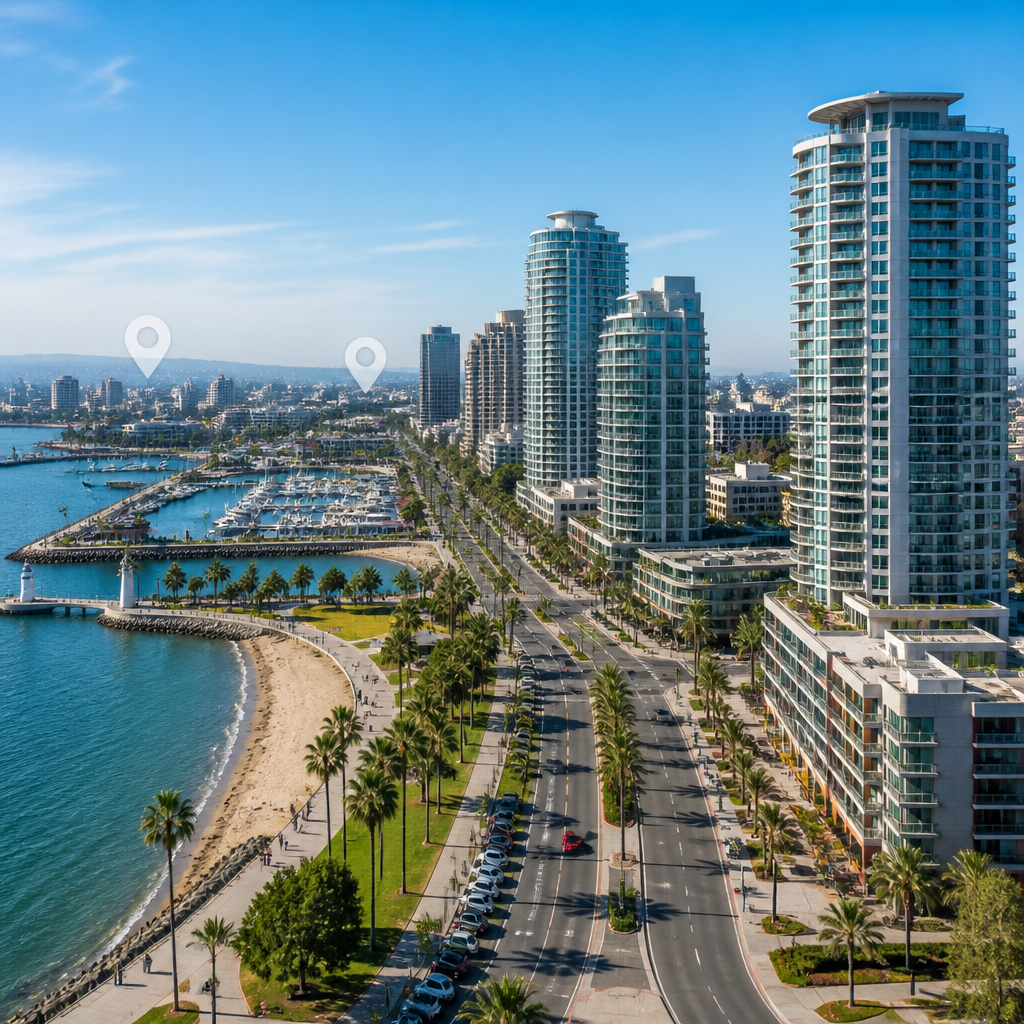
Long Beach High-Rise Condos: The Ultimate Buyer's Guide for 2026
Long Beach High-Rise Condos: The Ultimate Buyer's Guide for 2026 Long Beach high-rise condos along Ocean Boulevard and in Downtown Long Beach appeal to buyers seeking panoramic harbor views, lock-and-leave living, and strong long-term demand. According to Redfin, condos and townhomes account for rou
Moving to Huntington Beach CA: Essential Tips for 2026
Moving to Huntington Beach CA: Essential Tips for 2026 Moving to Huntington Beach CA in 2026 means entering one of Orange County’s most recognizable coastal markets. According to Redfin, Huntington Beach has maintained relatively tight inventory with homes often receiving multiple offers and typical